


































Reading a Water Pump Curve: Keep Flow and Head at the Same Point
For a centrifugal water pump, read a flow and head pair from the relevant curve instead of combining two separate maximum ratings.
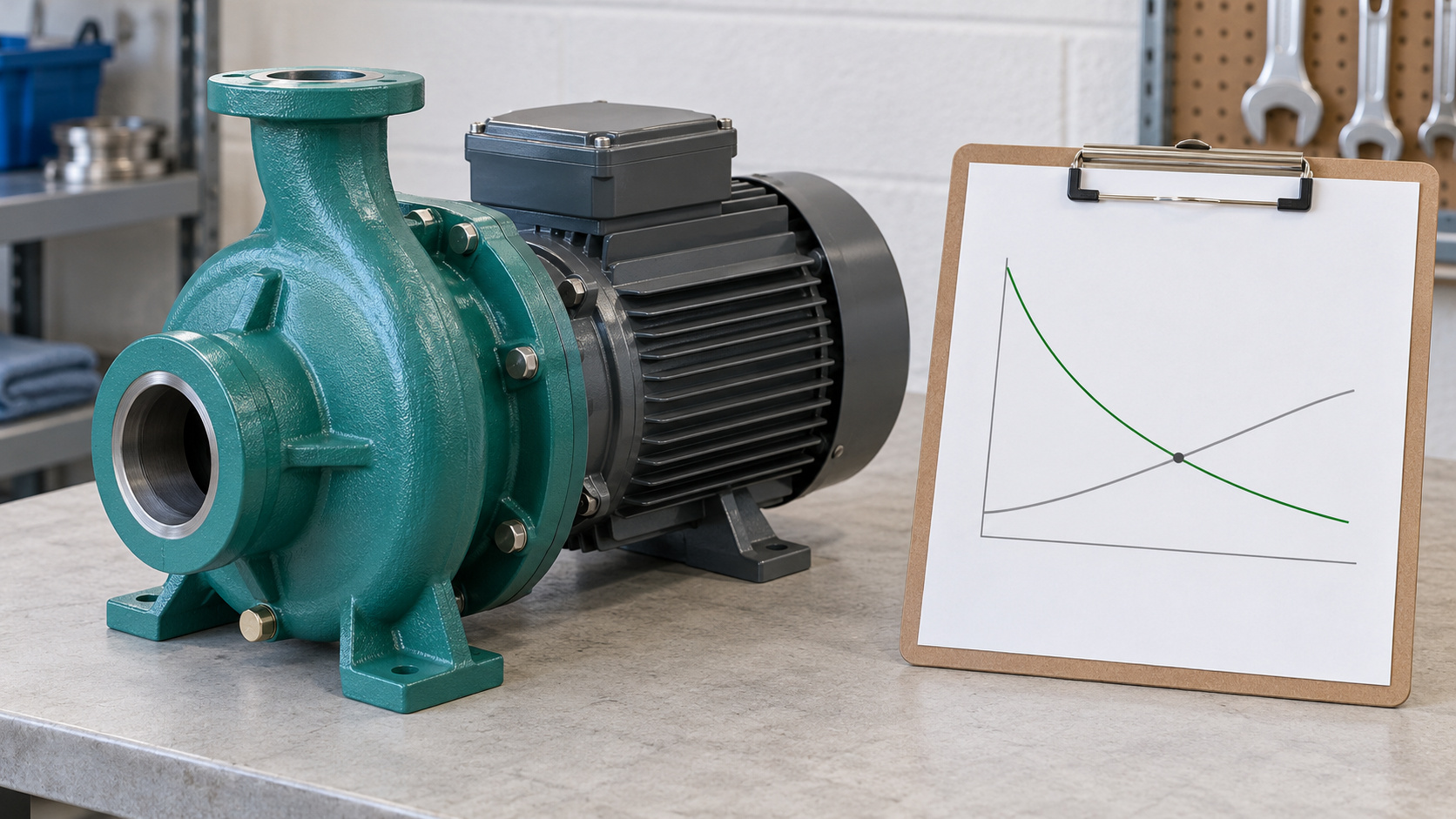
A pump listing may put maximum flow and maximum head next to each other in large type. I would pause before copying both into a purchase requirement. I would need to find the required flow and the required head together on the curve for the proposed centrifugal water pump. Seeing the two maximum ratings printed beside one another would not tell me that the pump could provide both together. The curve would be the next document I requested, before deciding whether to shortlist the model.
On a flow–head plot, flow is shown along one axis and head along the other. A point on the curve connects the two readings: at this flow, the plotted head is this value, under the conditions specified for that curve. For the conventional descending curve illustrated in Grundfos's training material, moving towards a higher flow means reading a lower head. Taking the highest number from each axis and putting them together would describe a different claim from the one drawn on the page. I would trace the proposed flow to the curve and read the corresponding head, keeping both units in the notes.
That still leaves the system into which the pump will be installed. In KSB's explanation of the operating point, the pump curve meets the system curve at an intersection. The latter represents what the system requires as flow changes. The buyer cannot locate that intersection from the pump's maximum ratings alone. A change to the system can also move the operating point. I would keep the installation designer involved in the enquiry and ask them for the duty requirement and system details to send with it. If the pipe layout changed while quotations were being compared, I would go back to them before treating the earlier marked point as the basis for an order.
The sheet itself needs reading carefully. A graph may contain more than one pump curve, and I would check which line belongs to the quoted configuration. The model, stated speed and any other configuration details on the sheet need to agree with the offer. A point read from another speed curve would not be the point I had asked the supplier to confirm. On my saved copy I would include the full sheet, with its heading and legend, and put a note beside the line used for the comparison. That would give the supplier a specific line to refer to in the reply.
Before accepting an offer, I would return the full curve with the proposed point marked and ask the supplier to confirm the configuration and conditions behind it. I would have the requested duty expressed in the same units as the graph before marking that point, retaining the original requirement alongside any conversion. I would also seek confirmation that the duty fell within the manufacturer's permitted operating range. Reading a point correctly is only part of selection; it is not permission to operate anywhere on the plotted line. The quotation could then name the agreed flow and head together, leaving the separate maximum figures in their proper role as catalogue information.
Share the product, specifications, quantity and destination to discuss sourcing options.